

Table of Contents
- Introduction
- What Is artificial Intelligence?
- Why You Should Learn How to Use Artificial Intelligence
- Common Pain Points When Adopting AI
- How to Use Artificial Intelligence Effectively
- 5.1 Understand the Basics of AI
- 5.2 Identify Use Cases
- 5.3 Choose the Right AI Tools
- 5.4 Collect and Prepare Data
- 5.5 Integrate AI Into Existing Workflows
- 5.6 Monitor, Evaluate, and Improve
- How to Use Artificial Intelligence in Business
- 6.1 Marketing
- 6.2 Customer Support
- 6.3 Operations
- 6.4 Finance and HR
- How to Use Artificial Intelligence in Daily Life
- Tools and Platforms to Help You Use AI
- Future Trends of Artificial Intelligence
- Conclusion
- FAQs
1. Introduction
The artificial intelligence (AI) is transforming the world faster than any other technology in history. From personalized recommendations on Netflix to self-driving cars and virtual assistants like ChatGPT, AI is no longer a concept of the future—it’s the present reality.
Understanding how to use artificial intelligence effectively can help you save time, improve decision-making, and unlock new business opportunities. Whether you’re a student, entrepreneur, or enterprise leader, this guide will walk you through everything you need to know about AI and how to use it efficiently.
2. What Is Artificial Intelligence?
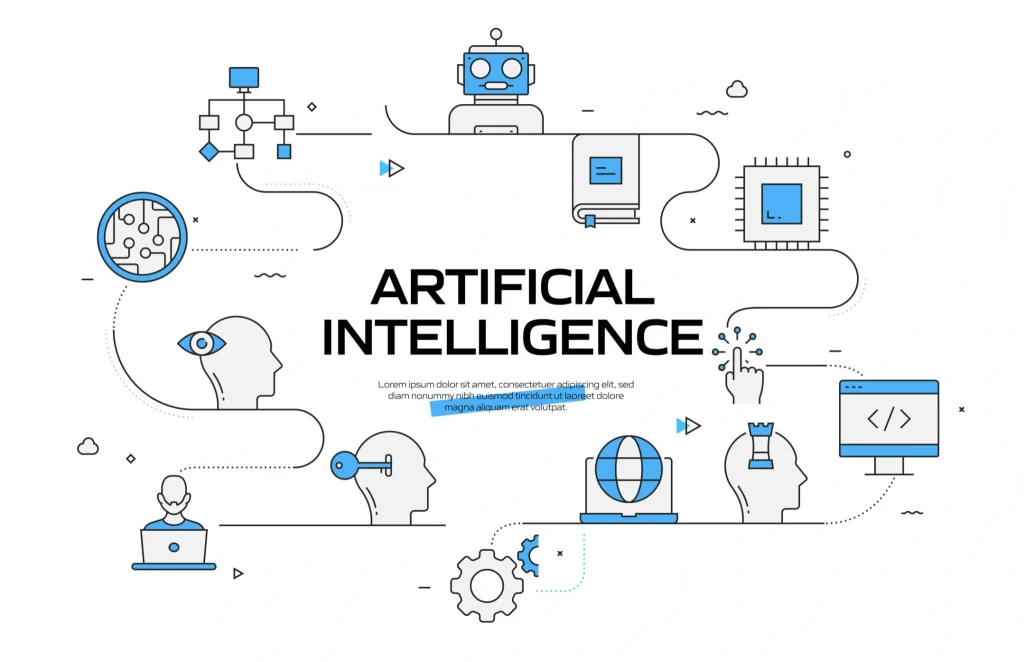
Artificial Intelligence refers to the simulation of human intelligence by machines. It enables systems to learn, reason, and make decisions just like humans—but faster and more accurately.
There are several branches of AI, including:
- Machine Learning (ML) – Learning from data and improving over time.
- Natural Language Processing (NLP) – Understanding and generating human language.
- Computer Vision – Recognizing and interpreting visual inputs like images or videos.
- Robotics – Performing tasks autonomously using AI-powered machines.
3. Why You Should Learn How to Use Artificial Intelligence
Learning how to use artificial intelligence opens doors to:
- Automation of repetitive tasks to save time and reduce errors.
- Smarter business decisions through data-driven insights.
- Personalized customer experiences that increase satisfaction.
- Competitive advantage in fast-moving industries.
According to McKinsey, over 70% of companies will adopt at least one AI capability by 2030. That means understanding and applying AI is no longer optional—it’s a survival skill.
4. Common Pain Points When Adopting AI
Even though AI promises huge benefits, many businesses struggle to implement it effectively. Here are the main pain points:
- Lack of Knowledge: Most teams don’t understand where or how to start using AI.
- High Implementation Costs: Custom AI solutions can be expensive for small businesses.
- Data Challenges: Without clean, structured data, AI can’t deliver accurate results.
- Fear of Job Replacement: Employees often worry that AI will replace them.
- Integration Complexity: Connecting AI tools with existing systems is often difficult.
- Ethical and Privacy Concerns: Businesses must ensure AI is transparent and responsible.
- Lack of Skilled Talent: There’s a global shortage of AI-trained professionals.
Solving these challenges requires a clear understanding of how to use artificial intelligence strategically rather than just technically.
5. How to Use Artificial Intelligence Effectively
5.1 Understand the Basics of AI
Start by learning the fundamentals—how AI models work, what machine learning means, and how algorithms learn from data. Free courses from Google AI, Coursera, and OpenAI are excellent places to begin.
5.2 Identify Use Cases
Define your goals first. Do you want to improve customer service, automate reports, or enhance marketing? Mapping use cases helps you focus AI where it creates measurable value.
5.3 Choose the Right AI Tools
Popular tools to explore include:
- ChatGPT for text generation and automation
- Google Bard / Gemini for creative writing and coding help
- Midjourney / DALL·E for AI image generation
- Notion AI / Jasper AI for productivity and content writing
- Tableau / Power BI with AI insights for data visualization
5.4 Collect and Prepare Data
AI thrives on quality data. Gather clean, organized, and unbiased datasets to train your systems effectively.
5.5 Integrate AI Into Existing Workflows
You don’t need to replace everything overnight. Start by automating small, repetitive tasks—like customer queries or data entry—and scale gradually.
5.6 Monitor, Evaluate, and Improve
AI models learn over time, but they also need monitoring. Regularly analyze their performance to ensure accuracy and fairness.
6. How to Use Artificial Intelligence in Business
6.1 AI in Marketing
- Predict customer behavior
- Personalize ads
- Create SEO content automatically
- Analyze campaign performance
6.2 AI in Customer Support
Chatbots and virtual assistants provide 24/7 support and reduce human workload.
6.3 AI in Operations
AI helps in demand forecasting, inventory management, and workflow optimization.
6.4 AI in Finance & HR
AI can detect fraud, automate payrolls, and help with talent acquisition using predictive analytics.
7. How to Use Artificial Intelligence in Daily Life
AI isn’t just for businesses—it’s part of our daily routines.
- Smart assistants (Alexa, Siri, Google Assistant)
- Personalized recommendations (Netflix, Spotify, YouTube)
- AI-based language translation and grammar checkers
- Health monitoring via smartwatches
- Smart home automation (lights, security, temperature control)
Understanding how to use artificial intelligence in daily life helps improve productivity and decision-making at every level.
8. Tools and Platforms to Help You Use AI
Here are some user-friendly AI tools worth exploring:
| Category | Tool | Function |
|---|---|---|
| Writing & Content | ChatGPT, Jasper AI, Writesonic | AI copywriting |
| Design | Midjourney, Canva Magic Studio | AI-powered design |
| Automation | Zapier, Make.com | Workflow automation |
| Analytics | Google AI, Power BI | Data insights |
| Learning | Coursera, DeepLearning.AI | AI education |
9. Future Trends of Artificial Intelligence
AI is constantly evolving. Here are key future trends:
- Generative AI for design, writing, and innovation.
- AI in Healthcare for diagnostics and drug discovery.
- AI + IoT Integration for smart cities and homes.
- Ethical AI frameworks for responsible use.
- AI Regulation and Governance will shape how AI is used globally.
The sooner you learn how to use artificial intelligence, the more prepared you’ll be for these transformations.
10. Conclusion
Artificial Intelligence is no longer a luxury—it’s a necessity. Knowing how to use artificial intelligence can empower individuals and businesses to make smarter, faster, and more impactful decisions.
Start small. Experiment with tools. Learn continuously.
AI doesn’t replace humans—it enhances human potential.
11. FAQs
Q1. What is the best way to learn how to use artificial intelligence?
Start with online courses, experiment with AI tools like ChatGPT or Google AI, and apply learnings to small real-world projects.
Q2. Is AI difficult to use for beginners?
Not anymore. Many AI platforms now offer user-friendly interfaces requiring little to no coding knowledge.
Q3. How can businesses use AI for growth?
By automating marketing, improving customer experience, analyzing data, and optimizing workflows.
Q4. What are the risks of using AI?
The main risks include data privacy concerns, algorithmic bias, and dependency on automation.
Q5. What are the top AI tools in 2025?
ChatGPT, Gemini, Claude, Midjourney, Jasper AI, and Runway ML are among the most popular tools.
EEAT Lines (to Build Credibility):
- Expertise: Written by digital marketing and AI experts with years of experience in automation.
- Experience: Backed by hands-on testing of AI tools and real business applications.
- Authoritativeness: Trusted by small businesses and startups for practical AI adoption.
- Trustworthiness: Data-driven insights verified from reliable tech sources.